

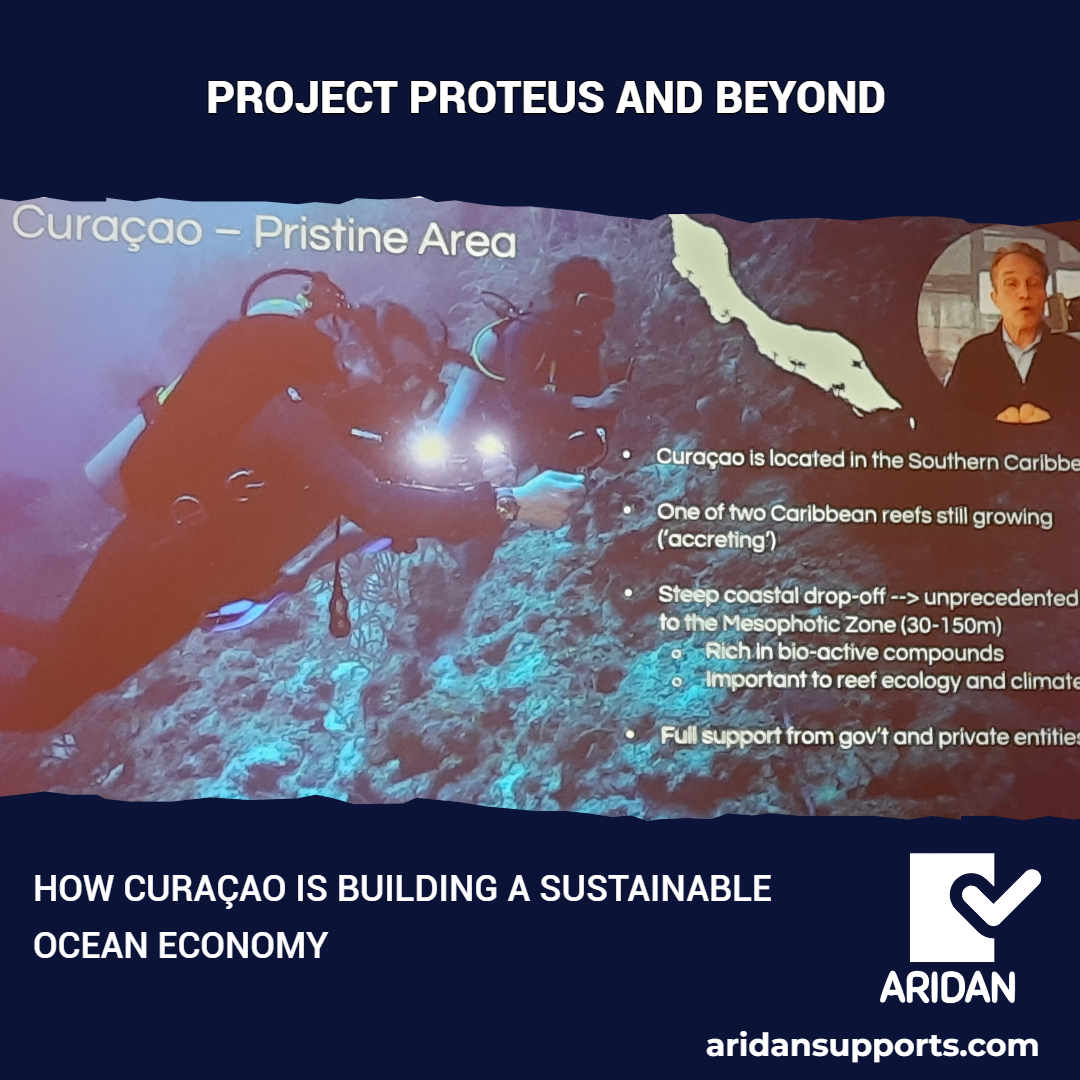
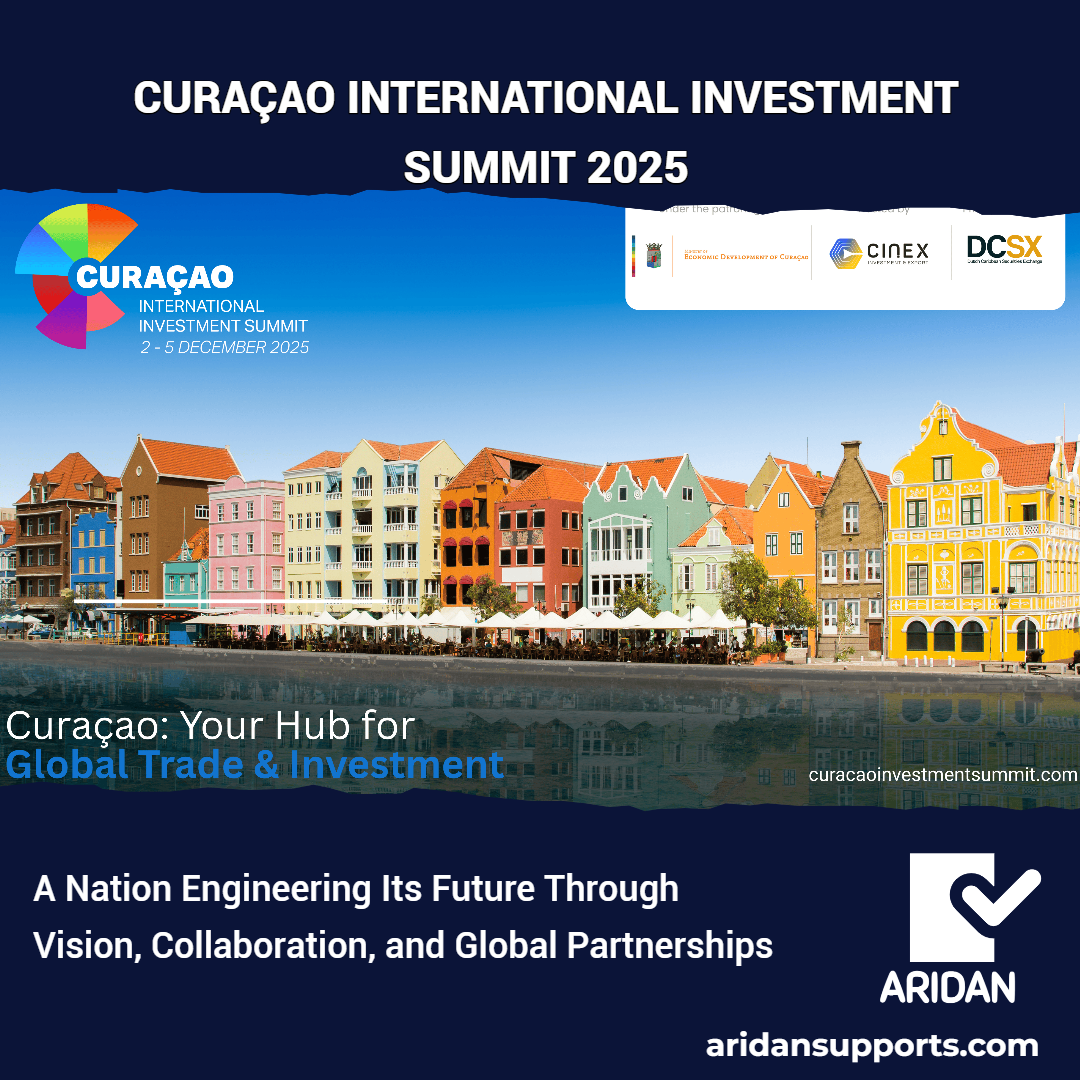
At the Curaçao International Investment Summit on December 4th, 2025, the blue economy conversation moved beyond theory into concrete action, opening with the presentation of Project Proteus, a global initiative positioning Curaçao as a key hub for ocean exploration, scientific research, and sustainable innovation.
Project Proteus set the tone for a broader discussion on how Curaçao can leverage its marine biodiversity, strategic location, and existing research capacity to build a resilient ocean-based economy.
The presentation highlighted the need for deeper ocean understanding through science, data, technology, and human presence beneath the sea, framing the ocean not only as an environmental asset but as a catalyst for innovation, education, investment, and long-term economic growth.
PROJECT PROTEUS: THE INTERNATIONAL SPACE STATION OF THE OCEAN
The session opened with a compelling vision for the future of ocean exploration through Project Proteus, a groundbreaking initiative led by ocean explorer and innovator Fabian Cousteau. Proteus is designed as the International Space Station of the ocean. In this permanent, modular, underwater research habitat, scientists, engineers, technologists, and innovators can live and work beneath the sea for extended periods.
Despite major advances in robotics, AI, and remote sensing, one critical element has been missing from ocean science: the human-technological interface. With less than 5% of the ocean explored, Proteus addresses this gap by enabling continuous human presence underwater, dramatically accelerating research, data collection, and innovation.
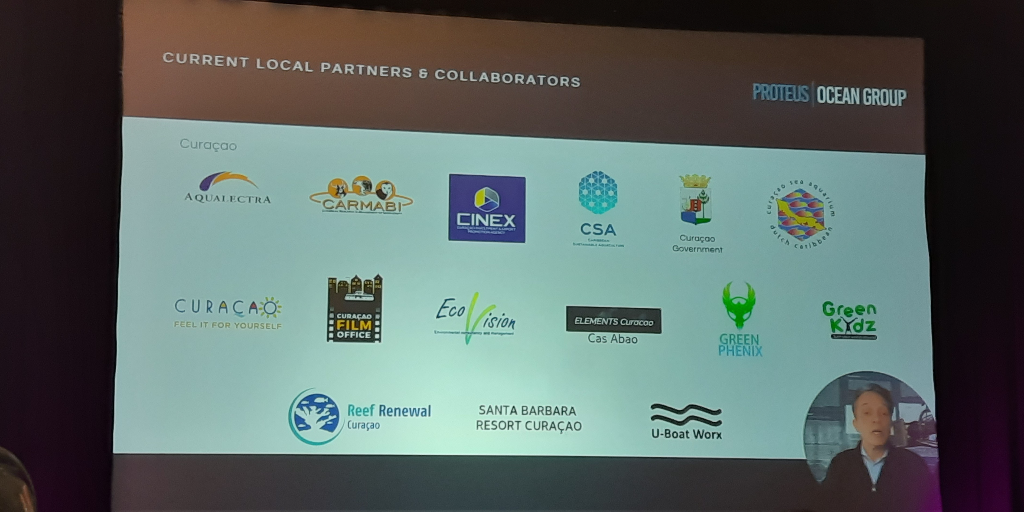
Curaçao plays a pivotal role in this vision. Over the past three years, nearly 100 sensor arrays have been deployed around the island to establish a critical baseline of data. Combined with autonomous vehicles, robotics, and AI-driven analytics, this ecosystem will support research in blue carbon, biodiversity, aquaculture, and climate resilience while also generating commercial opportunities and global visibility.
Beyond science, Proteus is built on four interconnected pillars:
- Technology & Data for ocean monitoring and innovation
- Habitat Infrastructure as a next-generation underwater R&D platform
- Media & Education to give the ocean a global voice
- Community & Economic Impact, ensuring local benefits, talent development, and international collaboration
CURAÇAO AS A BLUE BIO ECONOMY HOTSPOT
Following Project Proteus, the discussion expanded into Curaçao’s broader blue bio economy strategy. The island’s unique marine biodiversity, decades of scientific research, and relatively preserved reef systems, particularly along the eastern coastline, position Curaçao as one of the Caribbean’s remaining biodiversity strongholds.
While regional reef decline remains a serious challenge, Curaçao still maintains coral coverage levels capable of supporting healthy ecosystems, provided conservation and development are balanced. The message was clear: the value of nature goes beyond money, yet responsible investment can help protect and regenerate marine assets while creating economic opportunity.
INVESTMENT & ECONOMIC DEVELOPMENT OPPORTUNITIES
The blue economy can be a multi-sector growth engine. Key investment opportunities include:
- Ocean research & technology: Through initiatives like Project Proteus, Curaçao can attract investments in underwater research infrastructure, sensor technology, robotics, AI-driven data analysis, and marine monitoring systems. These platforms support climate research, biodiversity mapping, and blue carbon initiatives while generating commercial returns.
- Marine biotechnology & bioprospecting: Curaçao’s biodiversity opens opportunities in pharmaceuticals, cosmetics, nutraceuticals, and life sciences derived from marine organisms, supported by research institutions and controlled, science-based frameworks.
- Sustainable aquaculture: Large-scale, export-oriented aquaculture projects offer strong economic potential, including fish protein production for international markets, reduced import dependency, and supply-chain development in logistics, cold storage, and processing.
- Data, media & education platforms: Ocean data, immersive media, and educational content linked to underwater habitats create new revenue streams while strengthening Curaçao’s global brand in science, innovation, and sustainability.
- Tourism diversification: Science-based tourism, research tourism, and educational travel linked to marine conservation and innovation add high-value segments beyond traditional leisure tourism.
EMPLOYMENT & SKILLS DEVELOPMENT
The blue economy also presents significant job creation and workforce development opportunities, including:
- High-skilled roles in marine science, engineering, data analytics, robotics, AI, and environmental monitoring
- Technical and operational jobs in aquaculture, maintenance, logistics, and marine operations
- New career pathways for students and young professionals through research programs, internships, and international collaboration
- Indirect employment in hospitality, education, media, and business support services
Importantly, speakers emphasized that long-term success depends on collaboration between government, investors, academia, and local communities, supported by clear regulation and a strong commitment to environmental stewardship. With the right balance, Curaçao’s ocean can become a source of sustainable prosperity, economically viable, scientifically advanced, and socially inclusive.
FROM VISION TO IMPLEMENTATION
Curaçao has formally adopted the blue bio economy as part of its national export strategy and is now moving from concept to execution. A dedicated task force is mapping ocean-based opportunities, from aquaculture and hatcheries to marine research and biotech, while simultaneously reviewing legislation to ensure clarity, predictability, and investor confidence.
A strong emphasis was placed on facilitation, not obstruction: simplifying permitting processes, ensuring transparent regulation, and aligning economic development with environmental stewardship.
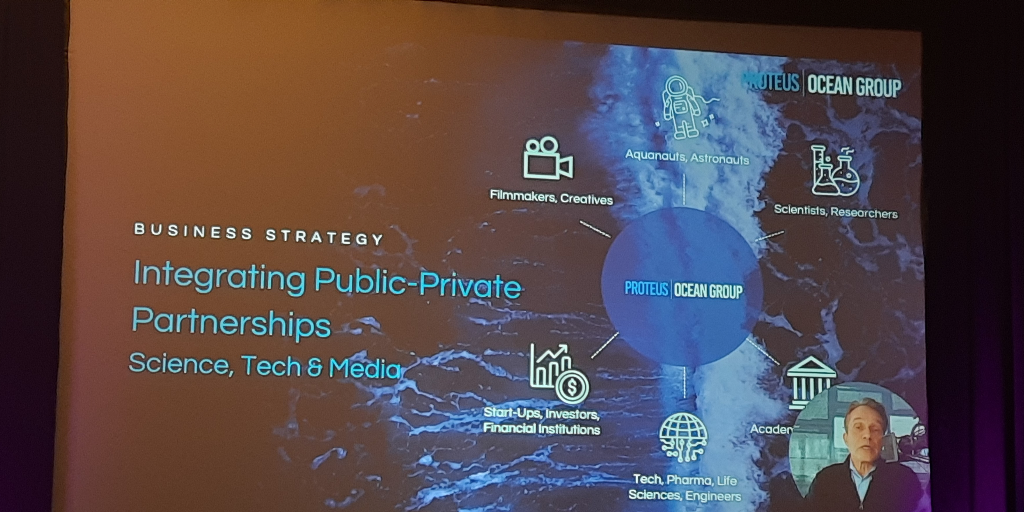
A recurring theme was the role of public–private partnerships in turning ambition into execution. The future ocean economy will bring together a diverse and dynamic mix of stakeholders, including:
- Aquanauts living and working beneath the sea
- Astronauts and space agencies enabling knowledge transfer and analog research
- Scientists and academic researchers
- Engineers across marine, biomedical, systems, and environmental disciplines
- Technology and data specialists (AI, robotics, sensors, analytics)
- Pharma, biotech & life sciences innovators
- Startups and scale-ups driving applied innovation
- Investors and financial institutions mobilizing capital and risk expertise
- Filmmakers, creatives, and storytellers giving the ocean a global voice
- Educators, policymakers, and regulators creating enabling frameworks
Together, these partnerships will unlock opportunities across multiple industries:
• Ocean research & deep-tech
• Marine biotechnology, pharma & life sciences
• Sustainable aquaculture & food systems
• Climate resilience & blue carbon solutions
• Data, media & education platforms
• Science-driven tourism and innovation ecosystems
WHY INVESTORS ARE PAYING ATTENTION
From an investor perspective, Curaçao offers a rare convergence of advantages:
- Strategic geography outside major storm paths
- Proximity to major export markets
- A government open to innovation and collaboration
- Strong scientific infrastructure and international partnerships
Combined with proven global models and technology transfer, Curaçao has the potential to become a regional hub for aquaculture, marine science, and blue innovation, while creating jobs, strengthening exports, and preserving its marine heritage.
A COLLECTIVE RESPONSIBILITY
The main message of the session was simple and powerful: the future of the ocean cannot be shaped alone.
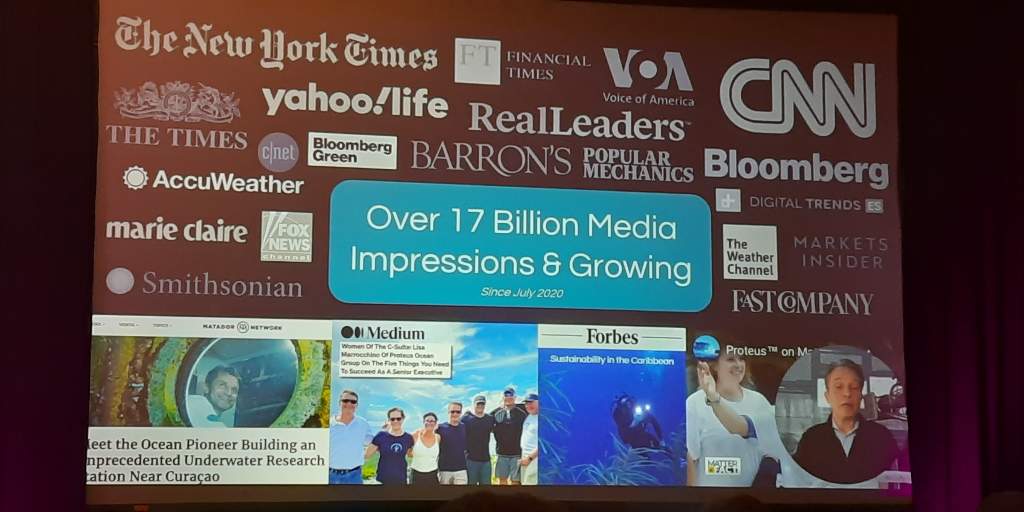
Initiatives like Project Proteus show that success depends on close collaboration between governments, investors, scientists, regulators, universities, and local communities. Curaçao’s ocean holds enormous scientific and economic potential, but tapping into it responsibly requires shared goals, long-term planning, and strong coordination.
By combining data, technology, clear policies, and investment, Curaçao can become a global example of how ocean innovation and environmental care can advance together.
FINAL THOUGHTS
At the Curaçao International Investment Summit, the blue economy moved from concept to action. Discussions highlighted that sustainable ocean development isn’t just one project or sector; it’s a connected ecosystem of research, innovation, education, and economic opportunities.
With Project Proteus leading the way, the summit showed that Curaçao is ready to take the lead not alone, but by bringing together the right partners to build a resilient, inclusive, and forward-looking ocean economy.
Visit the Proteus Group for more info: www.proteusoceangroup.com/curacao

Leave a Reply